

Inside the stilt homes in Guizhou’s Langde Miao village
(Last of two parts)
Text and Photos by: Lita Jane Botigan-Cadalig
At the Langde Miao ethnic minority village in China’s Guizhou Province, the community ensures that cultural heritage is financially lucrative amidst modernization.
This can be seen in how the villagers deliberately make their homes, traditions, and communal spaces the center of their economic survival without compromising their ancestral heritage.
From the village entrance to the performance ground and all the way to the exit point, the Miao community makes sure you get an authentic experience of how they live, and entice you to bring home a piece of their culture.
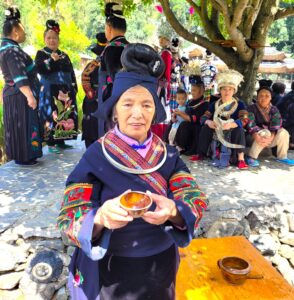
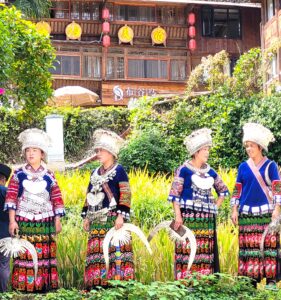
A typical day tour to the village starts with an experience of the Miao’s hospitality. This begins with a sip of rice wine at the entrance, which is offered by women dressed in vibrantly embroidered outfits and silver headdresses. As you make your way up the village, you get more offers from the 11 stations along the path to complete the 12-course rice wine welcome.
While women offer the drinks, men line up against the backdrop of the traditional Miao wooden stilt houses and play the bamboo pipe called lusheng, all part of the grand welcoming ceremony.
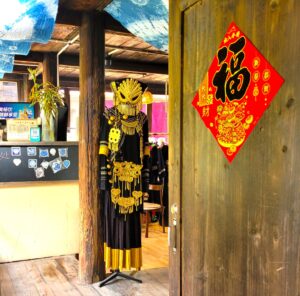
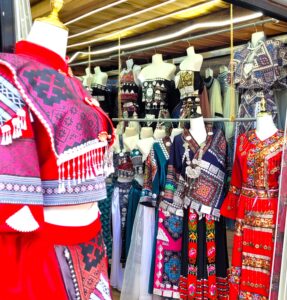
After the initial welcome, you will be led into the heart of the community, where well-preserved wooden stilt houses teeming with economic activities dot the narrow alleys. Some houses serve as souvenir shops, others function as cafes or restaurants, while some operate as rental shops for a Miao attire or a workshop area for batik and embroidery.

Unlike other ethnic villages that are curated for visitors to have a glimpse of a people’s culture, the Langde Miao community is a genuine ethnic settlement. It is not simply an area where people do business then go home at the end of the day. When you are in the village, you are actively living the culture. The wooden stilt houses, which are the exact same dwellings the Miao inhabited since time immemorial, are not merely places of business.
These houses remain as the actual residences of Miao families. When you eat at a restaurant or try on a Miao attire for a photo session, you are practically stepping into a family’s personal dining area or living room.

You get to experience more of the Miao culture at the community ground where a daily cultural performance is held. This begins with a choral piece by villages elders. Like the Grand Song of the Dong, another ethnic minority in Guizhou, the Miao chorus is also performed a cappella. After the choral performance, women dance to the rhythmic sounds of the lusheng played by the men. The performance culminates with another round of rice wine offered to the audience, followed by an invitation for you to join the community dance. By design, this makes you a passive spectator into an active participant.
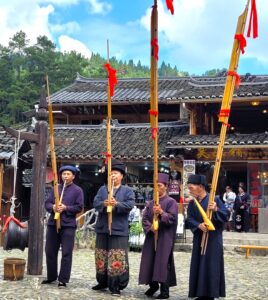
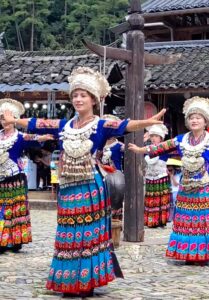
Former Philippine senator Nikki Coseteng, who now initiates cultural exchanges between the Philippines and China, said the indigenous peoples all over the world share many things in common, but the preservation and promotion of cultural heritage depends on how strongly the governments provide structural backing to their indigenous communities.
“The difference lies on how active the government is in promoting indigenous culture. In China, the government ensures that tourists are given enough information about a culture and are exposed directly to the beauty of that culture,” she said.
As most keepers of tradition are already old and competing with modern technology, Coseteng said the younger generation would sometimes look down on their own cultural heritage.
She said the Chinese government has spent billions in infrastructure development to connect even the most remote cultural villages to the broader market.
“Ethnic minorities are not left on their own to preserve their villages and promote their own products. The government built airports, train networks, and expressways so that a travel (to a village) that used to take hours would now take minutes,” she said.
“People in far-flung villages can now sell their handicrafts to a larger market and even online because they are more connected.”


Coseteng added accessibility plays a huge role in cultural preservation, emphasizing that when the younger generations see that traditional handicraft making, embroidery, or agriculture are economically viable, they are encouraged to keep these alive rather than looking for more lucrative jobs outside their communities.
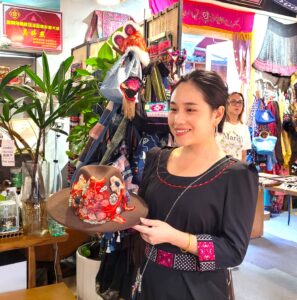
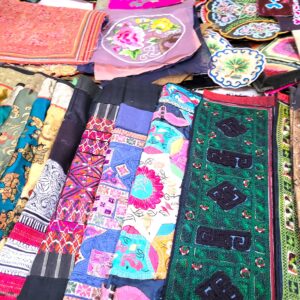
Ethnic minorities, like Miao in Langde and the Dong in Zhoaxing, both in Guizhou Province, have made their cultural heritage a source of immense pride and income, with appropriate structural backing from the government.
Coseteng drove this message to a similar case closer to home.
“If we look at this through the Cordillera lens, the children of weavers who see that their parents are making a lucrative living out of weaving will not look at it as a lowly undertaking,” she said.


